Trademark Registration in Africa: OAPI, ARIPO or Country by Country?
OAPI, ARIPO, Madrid and national filings compared, with a market-by-market table for Indian exporters.
- Written by
- Registered Trade Marks Agent
- Reviewed by
- Advocate, intellectual property
- Updated
- · 6 min read
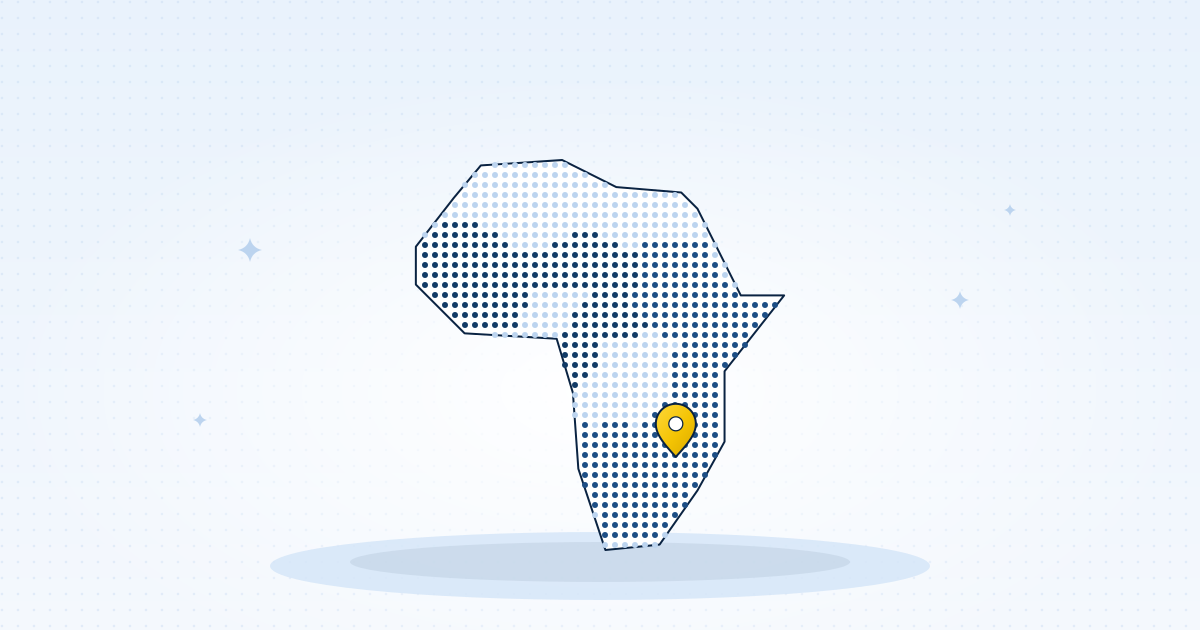
There is no single trademark for Africa. Indian brand owners combine four tools: OAPI, one title for 17 mainly francophone states; ARIPO, one application designating Banjul Protocol states in southern and eastern Africa; the Madrid Protocol, which reaches OAPI and many individual African members; and national filings for markets such as South Africa and Nigeria that are in neither system.
- Reviewed by
- Advocate, intellectual property
- Last updated
- Source
- OAPI: Bangui Agreement
On this page · 6 sections
What are the routes to trademark protection in Africa?
Africa has 54 countries and several overlapping systems. Each route has a different legal character, and that character, not the number of countries, should drive the choice.
- OAPI (Yaoundé) is unitary. Its 17 member states have no national trademark registers, so an OAPI registration is the only way to protect a mark in, for example, Senegal, Côte d’Ivoire or Cameroon. One title covers all 17. See our OAPI page.
- ARIPO (Harare) is a designation system. One application designates any of the states party to the Banjul Protocol; each national office can refuse, and enforceability depends on how each state has implemented the Protocol. See our ARIPO page.
- The Madrid Protocol reaches OAPI as a whole and individual African members, including Kenya, Ghana, Egypt, Morocco and others, through one application filed via India.
- National filings are the only route in countries outside both regional systems and outside Madrid, including South Africa and Nigeria, two of the continent’s major markets.
Which route reaches which market?
A starting map for the markets Indian exporters ask about most. Membership changes, so each plan is checked against the official lists before filing.
| Market | OAPI | ARIPO (Banjul) | Madrid | National filing |
|---|---|---|---|---|
| Senegal, Côte d’Ivoire, Cameroon and other OAPI states | Yes (only route) | No | Via OAPI | Not available |
| Kenya | No | No | Yes | Yes |
| Ghana | No | No | Yes | Yes |
| Nigeria | No | No | No | Yes (only route) |
| South Africa | No | No | No | Yes (only route) |
| Tanzania | No | Yes, enforceability questioned | No | Yes; Zanzibar has a separate register |
| Botswana, Namibia, Zimbabwe, Mozambique | No | Yes | Yes | Yes |
| Egypt and Morocco | No | No | Yes | Yes |
Check the WIPO Madrid member list, ARIPO and OAPI before filing.
How should an Indian exporter choose?
Start from where you sell and where copies are likely, then fit the routes around those markets.
Francophone West and Central Africa
OAPI is unavoidable and efficient. The open question is whether to file directly with OAPI or designate OAPI through Madrid. The revised Bangui Agreement, in force since 2020, recognises Madrid designations, but many owners still file directly for their main brands to remove any doubt and to avoid the five-year dependency on the Indian base mark.
East and southern Africa
Use national filings in the markets that matter most, especially where enforceability of ARIPO marks has been questioned, and use ARIPO or Madrid for wider coverage at lower cost. Kenya and Ghana are ARIPO members but cannot be designated for trademarks under Banjul; they are reached through Madrid or national filings.
Nigeria and South Africa
Both need national applications through local agents, each with its own examination, opposition period and renewal cycle. Both are large, commercially important markets with active counterfeit trades, so they usually belong in the first wave of filings rather than the second.
North Africa
Egypt and Morocco are Madrid members and can be designated in a Madrid application from India, alongside Middle Eastern members such as the UAE. Transliteration into Arabic is a branding decision as well as a legal one; a separate filing for the Arabic form of the mark is common.
What should an African trademark plan include?
A short list that keeps cost under control and avoids the problems we see most often.
- Priority. File within six months of your Indian application to claim its date in Paris Convention countries.
- Distributor risk. Register before appointing distributors; in several markets a distributor filing first is the most common dispute.
- Languages. Plan French for OAPI, Portuguese for Mozambique and Arabic forms for North Africa.
- Use. Keep evidence of sales in each market; non-use cancellation periods apply in most systems.
- One coordinator. Several regional and national agents are involved. One adviser should hold the full docket of deadlines and renewals.
- Renewals and recordals. OAPI, ARIPO, Madrid and national registrations each renew on their own dates and record changes of owner separately. A change of company name in India must be recorded in every system.
How long does registration take, and what drives the cost?
Plan for 12 to 24 months from filing to registration in most African systems, and longer where an office has a backlog or an objection is raised. OAPI and ARIPO timelines vary more than European ones, and national offices differ widely.
Cost is driven less by government fees than by the number of separate filings and agents. Each national filing needs a local agent, a power of attorney and its own renewals; a regional filing spreads one set of costs across many countries. That is why the usual plan is a few national filings in the key markets plus a regional or Madrid filing for the rest. We confirm official fees in writing before filing, as they change often.
Enforcement and customs
A registration is what lets you act against counterfeits. Several African countries allow owners to record registered trademarks with customs or anti-counterfeiting agencies, so that infringing imports can be detained at the border. Recordal needs a registration in that country, so for products with a counterfeit problem the national filing comes first. Keep the registration certificates, renewal records and a product identification guide ready for the authorities.
Questions about trademark registration in Africa
Is there one trademark application that covers all of Africa?
No. OAPI covers 17 states with one title, ARIPO designations cover Banjul Protocol states, and Madrid reaches its African members, but large markets such as South Africa and Nigeria need national filings.
What is the difference between OAPI and ARIPO in practice?
OAPI grants a single unitary right for states without national registers. ARIPO forwards one application to each designated national office, which can refuse it, and enforcement depends on national implementation.
Can I reach African countries through my Madrid application from India?
Yes, for African Madrid members, including OAPI as a whole, Kenya, Ghana, Egypt and Morocco. ARIPO, South Africa and Nigeria are not in the Madrid System.
Which African markets should be filed first?
Usually those where you already sell or are about to appoint a distributor, and large markets with counterfeiting risk such as Nigeria and South Africa. Wider coverage through OAPI, ARIPO or Madrid can follow.
Do I need local agents in each country?
For national filings and for direct OAPI and ARIPO filings, yes. For Madrid designations, a local agent is needed only if an office refuses protection or the mark is opposed.
How long do African registrations last?
Most trademark registrations in Africa, including OAPI and ARIPO, last ten years and are renewable for further ten-year periods.
Can I claim my Indian filing date in African countries?
Yes, in countries party to the Paris Convention, which include almost all African states, OAPI and ARIPO filings, if you file within six months of the Indian application.