Choosing the Right Trademark Class: Common Mistakes to Avoid
Retail, SaaS, food and fashion: the class mistakes that cause objections and gaps, and how many classes to file.
- Written by
- Advocate, intellectual property
- Reviewed by
- Registered Trade Marks Agent
- Updated
- · 7 min read
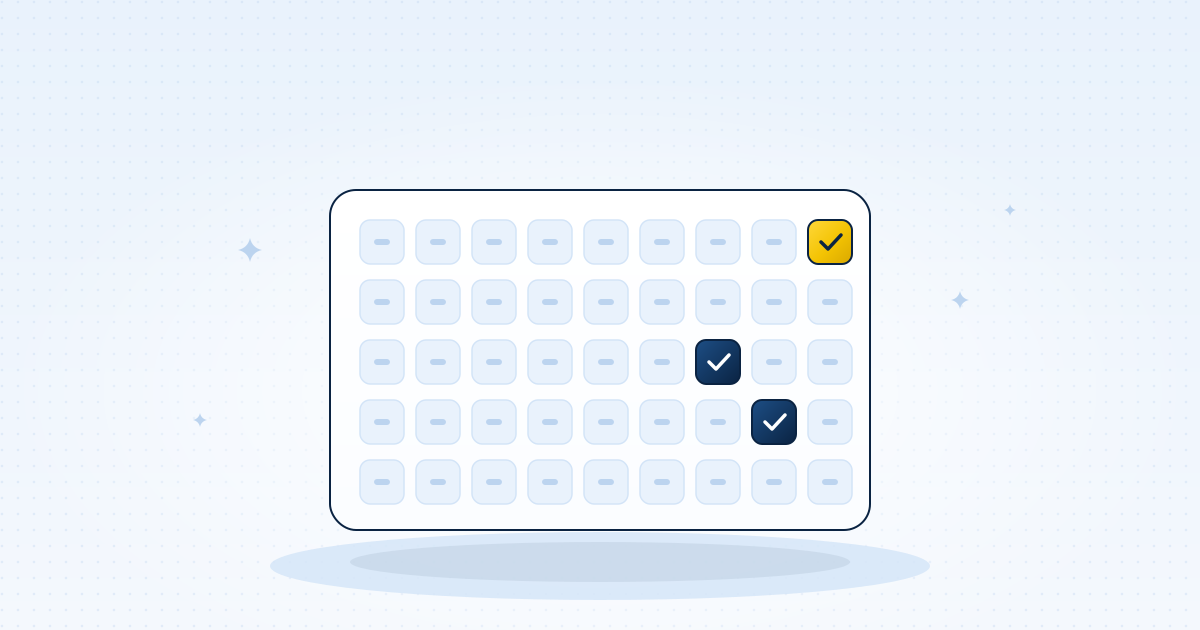
A trademark in India is registered for specific goods and services, grouped into the 45 classes of the Nice Classification: classes 1 to 34 for goods and 35 to 45 for services. Choose the classes for what you sell now and plan to sell within about three years, word the goods and services precisely, and remember that retail (Class 35) and software as a service (Class 42) are separate from the goods themselves.
- Reviewed by
- Registered Trade Marks Agent
- Last updated
On this page · 7 sections
How do trademark classes work in India?
Classes define the scope of your registration. India follows the Nice Classification administered by WIPO, and the Trade Marks Registry applies the edition in force; the 13th edition took effect on 1 January 2026. Each application lists the goods and services the mark covers, and each class listed attracts its own government fee.
Since the Trade Marks Rules, 2017, a single Form TM-A can cover several classes. That is convenient, but the protection still extends only to the goods and services listed. If you register a mark for clothing in Class 25 and later launch handbags (Class 18), the handbags are not covered by the registration.
Classes are an administrative tool, not the test of conflict. When the Registry or a court decides whether two marks conflict under section 11, it asks whether the goods or services are similar and whether confusion is likely, regardless of class numbers. Tea (Class 30) and a café (Class 43) are in different classes but can be related enough for a conflict. A search should therefore look beyond your own classes.
The fastest way to get a first shortlist is to search your products in plain words with our trademark class finder, then check the result against the official headings on our trademark classes page.
What are the most common class selection mistakes?
These are the errors we see most often in applications that come to us for objection replies or for a second filing.
Filing for the goods but not the shop
Selling your own products is covered by the goods class. Running a shop, website or marketplace that sells goods, including other brands, is a retail service in Class 35. D2C brands that plan their own online store usually need both.
Treating all software as Class 9
Downloadable software and apps fall in Class 9. Software provided online without download, such as SaaS and platforms, is a service in Class 42. Many startups need both, and some add Class 35 or 41 for what the platform does.
Mixing up the food classes
Dairy, edible oils, pickles and processed fruit are Class 29; tea, coffee, spices, flour, bakery and sweets are Class 30; fresh produce is Class 31; non-alcoholic drinks and packaged water are Class 32; restaurants and cloud kitchens are services in Class 43.
Forgetting the neighbouring fashion classes
Clothing, footwear and headwear are Class 25, but bags and wallets are Class 18, jewellery and watches Class 14, and eyewear moved to Class 10 in the 2026 edition. Spread the brand only as far as you will really use it.
Writing a specification that is too vague or too broad
Vague terms such as "all goods in Class 25" or "accessories" draw objections. Claiming everything in a class invites challenge for non-use after five years. Use specific, recognised terms.
Leaving out manufacturing for others
Contract manufacturers and job workers who make goods to order for other brands provide a service in Class 40, not the goods classes.
Which classes do typical businesses need?
Starting points only. The right list depends on the exact goods and services, so confirm each one before filing.
| Business | Core class | Often also needed |
|---|---|---|
| Clothing or ethnic wear brand | 25 | 35 (online store), 18 (bags), 14 (jewellery) |
| Restaurant or cloud kitchen | 43 | 30 or 29 (packaged foods), 35 (franchising), 39 (delivery) |
| SaaS or software startup | 42 | 9 (apps), 35 or 41 depending on the platform |
| Cosmetics and personal care | 3 | 35 (retail), 5 (medicated products), 21 (applicators) |
| Tea, coffee or spice brand | 30 | 35 (retail), 43 (café), 32 (ready-to-drink beverages) |
| Ayurvedic or nutraceutical products | 5 | 3 (non-medicated cosmetics), 30 (food products), 44 (therapies) |
| Coaching or edtech | 41 | 9 (downloadable content), 42 (learning platform), 16 (printed material) |
| Jewellery brand | 14 | 35 (retail), 26 (hair accessories) |
Classification follows the Nice Classification in force. Our class finder lists the official heading and examples for all 45 classes.
Where can I check my own goods and services?
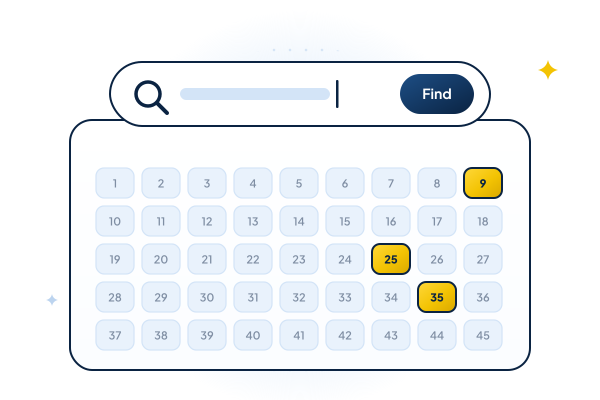
Search the 45 Nice classes in plain language and shortlist the ones your goods and services fall into.
Find your classesHow many classes should you file in?
File in every class you use now and every class you have a real plan to enter within the next few years. Each class costs a separate government fee (our fee calculator adds them up), so the list should be deliberate.
Three practical rules help:
- Core first. The class of your main product or service is not optional. If budget is tight, file the core class now and add others in a second application later.
- Defend the brand where copying is likely. If imitators would most likely put your name on a related product, that product’s class deserves protection even before you launch it.
- A later class means a later date. Classes added in a later application take the later filing date. If a competitor files in the meantime, their date wins in that class.
A trademark search in each class you plan to claim is the other half of the decision. A clear search in the core class but a conflict in a secondary class may change the order of filing, or the brand itself.
What changed in the 2026 Nice edition?
The 13th edition applies to filings from 1 January 2026
The main change for most brands moved spectacles, sunglasses and contact lenses from Class 9 to Class 10, with smart glasses staying in Class 9. Existing registrations are not reclassified, but new applications and renewals should use current wording.
Questions about choosing trademark classes
Can I add a class to my trademark application after filing?
No. The goods and services can be narrowed after filing but not widened. A new class needs a new application, with its own filing date and fee.
Does a registration in one class stop others using the mark in other classes?
Not automatically. It protects your listed goods and services and similar ones where confusion is likely. Well-known marks can receive wider protection, but most marks should be filed in each class that matters.
Is one multi-class application better than separate applications?
A multi-class application is simpler to manage, but an objection in one class can delay the whole application. Separate applications keep classes independent. We advise on the split case by case.
Which class covers an e-commerce website?
Selling goods online is a retail service in Class 35. Operating a platform that hosts other sellers can also involve Class 35 and Class 42. The goods you sell under your own brand go in their own classes.
Do I need Class 35 if I only sell my own products?
Often yes, if you run your own store or website. Class 35 protects the brand of the shop itself. Without it, a competitor could argue that your registration covers only the goods.
Who decides if my classification is wrong?
The examiner. If the goods or services are in the wrong class, the Registry raises a classification objection in the examination report, and the specification is amended in the reply.